Apps spend millions optimizing the "Happy Path" but leave error states to backend logic. When a system fails, users face dead-ends, confusing jargon, and anxiety. These broken moments don't just frustrate users; they actively destroy trust, trigger immediate app abandonment, and cost businesses significant revenue.
I approached these errors by analyzing real-world user behavior and emotional friction. Instead of just fixing broken UI, I focused on rescuing the user's core intent. By backing my design decisions with user empathy and business logic, I shaped these screens to turn frustrating dead-ends into seamless, one-tap recovery flows.

Financial errors trigger instant panic, especially at a physical checkout counter. Instead of displaying generic, contradictory timelines, the UI must immediately confirm the user's money is safe. By surfacing the exact system limit and providing a one-tap bank switch, we save the transaction without breaking the real-world flow.

Outcomes & Achievements
Eliminated "dead-end" user flows across Fintech, Job-Board, and E-commerce platforms.
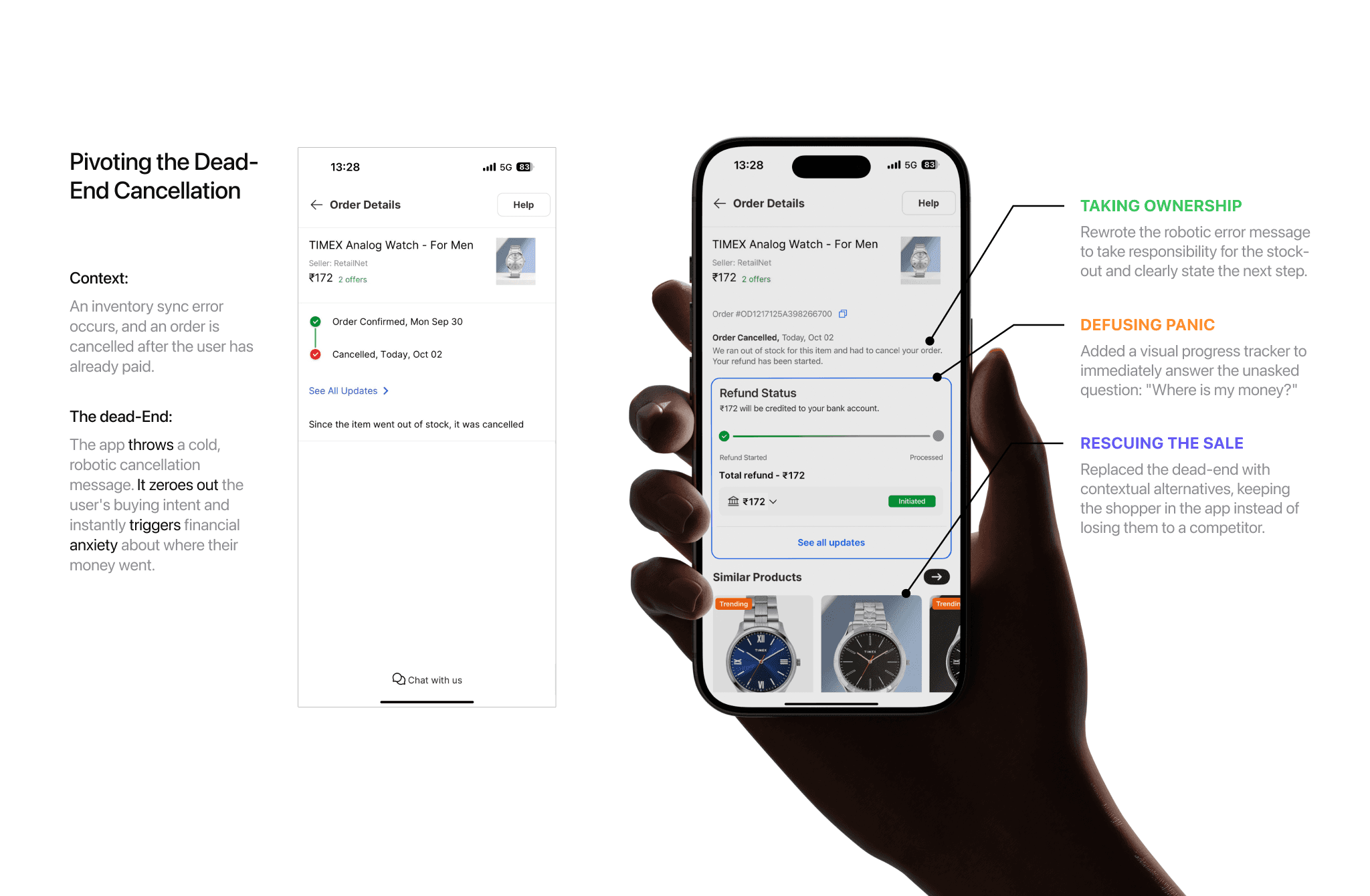
Translated complex backend constraints (API drops, inventory sync errors, over-filtering) into human-readable, actionable UI.
Strategic Outcomes:
Rescued Transactions: Designed progressive disclosure interactions (bottom-sheets) to save point-of-sale failures without forcing app restarts.
Reduced User Churn: Replaced rigid filter rejections with semantic, lateral suggestions based on actual recruiter behavior.
Defused Anxiety: Mapped emotional user journeys to proactively answer unasked financial questions via visual trackers.
The Core Achievement: Developed the reusable "Diagnose, Neutralize, Pivot" design framework, proving that high-retention product design requires balancing business metrics (protecting customer acquisition costs) with deep human empathy.